AdHaircuts in Bethel since 1992.
Walk in, take a seat and catch up on what's going on around town. No appointments, first come, first served. Men $25, women $30, kids from $23. Open weekdays from 10 am.
See prices & hoursBased in Alaska and covering the Yukon-Kuskokwim region. We also help local businesses tell their own story with video, photos and design.
We report on what's happening in rural Alaska's economy, and we make the photos, video and design that help local businesses grow. Flat prices, no long contracts.

Features on the rural economy, small businesses and local stories from across the YK region.

We visit your business, interview you and turn it into a feature article, videos and photos.

Video ads, social posts, logos, flyers, menus, Google listings, printing and laminating.
Business stories and features from across the Yukon-Kuskokwim region.


▶ VIDEOAds from businesses in our community. Want your business here? Grizzly Media makes the ad and puts it in front of the people you serve.
AdWalk in, take a seat and catch up on what's going on around town. No appointments, first come, first served. Men $25, women $30, kids from $23. Open weekdays from 10 am.
See prices & hoursPepperoni, sausage, pineapple and jalapeños, finished with honey. Burgers, fries and pizzas made by local friends on Ridgecrest Drive.
Order from Kusko Pizza
AdYour own ordering page for your restaurant or store. Pickup and delivery, card or cash, and no markup on your card payments.
See TIKT plans
AdOne free account, points at every business that joins, and rewards you can share with family and friends.
Join TIKT RewardsFlat prices, no long contracts. Start with one piece or bundle a few for a launch or a season.
A Spotlight is a short feature on a local business and the people behind it. We come to you, film and photograph the real work, and publish the story the following week. You keep every photo and clip.
Order one piece at a time, whenever you need it.
A scripted, shot and edited ad sized for Facebook, Instagram and Reels.
Logo, colors and type so everything you put out looks like you.
A clean, printable menu or price list your customers can actually read.
Event, sale or announcement flyer for print and social.
Designed graphic with a written caption, ready to publish.
Set up or clean up your listing so people can find your hours, photos and phone.
Travel outside our local area is quoted separately.
Put your business on the Grizzly Media website, on the Home page and the Promos page. Send us your ad, or have us make one for you.
Your ad on Grizzly Media for one week. Choose how many weeks.
Your ad on Grizzly Media for one month. Choose how many months.
Standard 8.5 × 11 in. letter pages. Bring your file or have us print the flyers and menus we design for you.
8.5 × 11 in. letter size.
8.5 × 11 in. letter size. Good for menus, signs and price lists.
Local delivery: We'll deliver your printed and laminated pages to you in person.
Business Spotlights, entrepreneur features and videos made with the people who run Alaska's small businesses.
Our first published features will appear on this page. Here's what each one includes.
A written feature and short video on a local business, its owner and the work behind it.
Interviews with founders and makers building something new in rural Alaska.
Promo cuts, short features and ads made for local businesses.

In Bethel, local businesses are often built from more than just a business idea. They're built from relationships, hard work, a willingness to take a chance, and a desire to create something that benefits the community.
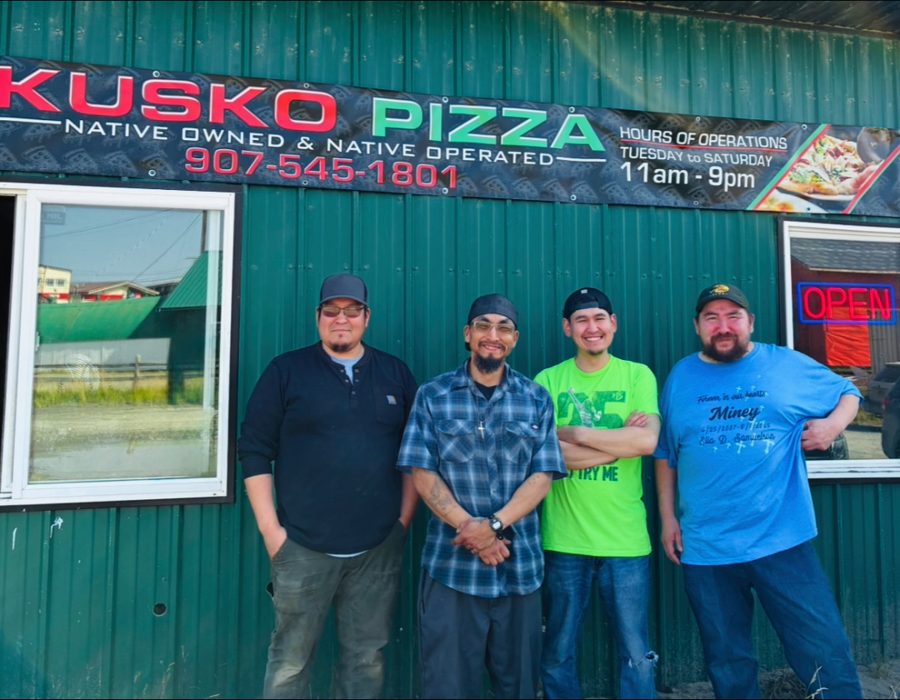
This week, Grizzly Media is proud to spotlight Kusko Pizza, a growing local restaurant founded by Antone Alexie, with his longtime friend Nick Hawk running the kitchen as head cook. What started as an unexpected decision has become a six-month-old business with a close-knit team, an evolving menu, and big plans for the future.
For Antone Alexie, the road to opening Kusko Pizza began long before the restaurant opened its doors. Originally from Sleetmute, Alexie came to Bethel around 2003 or 2004 and graduated from Bethel Regional High School in 2006.
Before becoming a restaurant owner, he worked a variety of jobs around the region. His experience included working at the airport, working for Alaska Housing in maintenance, and spending time at Swanson's. But throughout those different jobs, cooking remained something Alexie naturally enjoyed. At home, cooking became a place where he could relax and experiment.
“My peace is cooking at home.”Antone Alexie, owner
His cooking interests have always been broad, ranging from Native foods and burgers to barbecue and soups. Over time, that comfort in the kitchen planted a seed that eventually became a business.
The decision to open Kusko Pizza wasn't necessarily part of a long-term business plan. Alexie had become increasingly frustrated with some of his experiences ordering food locally. He recalls dealing with long wait times, cold pizza, and meals that didn't always feel like they matched what customers were paying. On one occasion, he remembers waiting nearly three hours for a pizza from a local vendor.
Those experiences made him think about what he could offer himself. Eventually, Alexie made a major decision. He left his job with Alaska Housing, purchased restaurant equipment, acquired a lease for a brick-and-mortar location at 401 Ridgecrest Drive, and took a chance on opening his own restaurant.
That decision led to Kusko Pizza. The restaurant opened in February 2026, and on August 25, the business will reach its six-month milestone. What began as something Alexie describes as a last-minute decision has quickly become a growing part of Bethel's local food scene.
While Antone's story brought him to the kitchen, he didn't build Kusko Pizza alone. Head cook Nick Hawk has known Antone for approximately 23 years.
Hawk is originally from Eek, a small community about 50 miles south of Bethel with a population of roughly 300 people. Born and raised in Alaska, Nick has lived in several communities, including Anchorage, Juneau, Sitka, and Bethel. He graduated from Eek High School in 2005. Before getting involved with Kusko Pizza, Nick had worked in the airline and telecommunications industries. Running a restaurant kitchen was something completely different. But when Antone approached him about opening a restaurant, Nick decided to give it a shot.
“It was something new and different, something you've never done. You can't really know unless you try.”Nick Hawk, head cook
That willingness to try something new brought the two longtime friends into the kitchen together.
One of the things that stands out about Kusko Pizza isn't just the food. It's the people behind it. Nick describes the restaurant's team as five close friends working together: Antone (owner), Nick (head cook), Derek (cook), and Billy “Bud” (delivery driver and logistics). That friendship has become an important part of the day-to-day atmosphere.
“We're all pretty close to each other. We have fun. We're always talking.”Nick Hawk
For Nick, having that kind of relationship with the people he works alongside makes the long days easier. And those days can get busy. During a lunch or dinner rush, Nick says the restaurant can become nonstop for three, four, and sometimes even five hours. Communication and teamwork become essential.
The crew jokes around during the slower moments, but when the rush hits, everyone knows they have to work together. That tight-knit dynamic is one of the things Nick says keeps him coming back every day.
For Nick, working at Kusko Pizza isn't simply about having another job. It's about building something with a longtime friend. When asked what Kusko Pizza means to him, Nick talked about the excitement of seeing the business start to take off. People around town have already started recognizing the connection.
“Hey, I heard you guys opened up Kusko Pizza, you and your friend.”
For Nick, hearing people talk about the restaurant is a sign that the business is beginning to become part of the community. It's something different from the industries he had worked in before, but that's part of what makes it exciting. Now, he's waiting to see just how far the restaurant can go.
“It's something different, but it's fun and exciting, and I'm just waiting for it to thrive.”Nick Hawk
For Nick, part of the answer is simple: pizza is one of his favorite foods. But there's also something enjoyable about the process itself. Making the dough, stretching it, and turning it into an actual pizza gives the team something hands-on and creative to work with.
More importantly, Antone and Nick wanted to give the community more options when it comes to food. Kusko Pizza isn't trying to be just another place to grab something to eat. The team is experimenting with what they can offer and continuing to develop the restaurant around what they believe customers will enjoy.
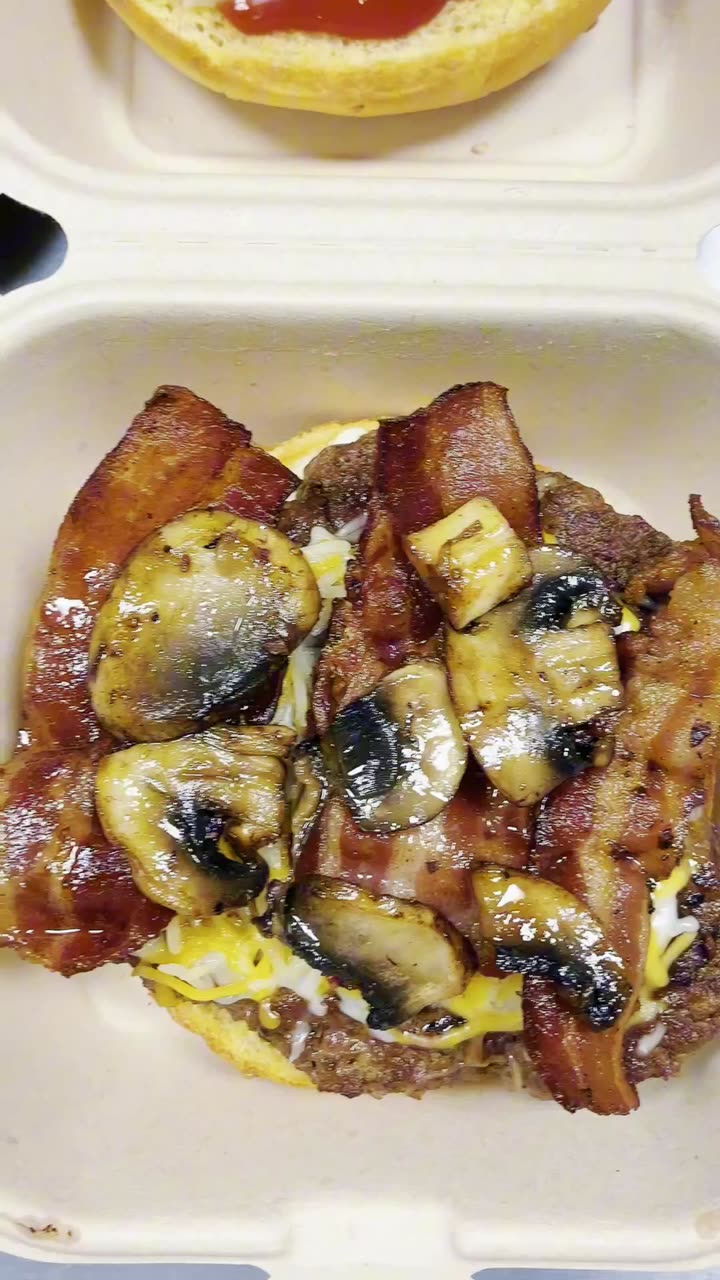
If you're visiting Kusko Pizza for the first time, Antone recommends the specialty burgers and fries. They're simple, familiar, and can generally be prepared within five to ten minutes.
But Nick has a different recommendation for anyone who likes a little heat: the restaurant's sweet-and-spicy pizza. It combines pepperoni, sausage, pineapple and jalapeños, and once it comes out of the oven, it gets a drizzle of honey on top. For Nick, it's his favorite pizza on the menu. It's also a good example of the experimentation happening at Kusko Pizza as the team continues developing the menu.
Kusko Pizza isn't finished building its menu. Antone says customers can expect more changes and additions in the future, including a variety of sandwiches and rotating weekly specials. Some of the planned specials include:
Starting a restaurant has also brought its share of challenges. For Antone, one of the biggest challenges is money. Running a restaurant is a numbers game. Costs have to be managed carefully, and every part of the business has to work together for the restaurant to remain sustainable.
It's a lesson that comes with entrepreneurship in any industry, but especially in food service. You can have good food and great people, but you still have to manage the business side correctly. For Antone and Nick, that's part of the journey they're currently navigating.
Despite the challenges, both Antone and Nick say one of the most rewarding parts of Kusko Pizza is serving the community. Antone enjoys serving the people of Bethel and appreciates the friendliness of the community. Nick sees that connection as well. Bethel is a place where people know each other, and that extends into the restaurant.
Nick especially enjoys seeing people from the villages come into town and bring their families to Kusko Pizza. He described the experience of having someone come in and say something along the lines of:
“Let's go to Kusko Pizza. Nick works there.”
Those moments make the restaurant feel personal. The customers aren't just strangers walking through the door. They're neighbors, friends, relatives, and people from communities throughout the region.
At its core, Kusko Pizza is a local business built by local people. Antone and Nick are both Alaskans with deep connections to the region, and the restaurant's kitchen staff are local as well. The team includes people from Bethel and surrounding communities, including the Yukon-Kuskokwim Delta.
That local connection is central to the restaurant's identity. Kusko Pizza represents a group of people who decided to take a chance on themselves and create something new in their own community.
Six months into the journey, Antone and Nick are still looking ahead. The menu will continue changing. New sandwiches are coming. Weekly specials are being planned. The team will continue learning and improving. And the team is hoping to see Kusko Pizza continue to grow and thrive.
What began with Antone leaving his job, purchasing equipment, leasing a location, and deciding to take a chance has become something much larger: a restaurant built around friendship, local talent, good food, and a desire to serve the community.
For Antone and Nick, the journey is still just getting started. And for Bethel, it's another local business giving people something new to try, while creating opportunities for local people to work together and build something of their own.
Grizzly Media would like to thank Antone Alexie, Nick Hawk, and the entire Kusko Pizza team for taking the time to share their story with us.
If you haven't tried Kusko Pizza yet, stop by, support local, and try something from the menu, whether that's one of their burgers and fries or Nick's favorite sweet-and-spicy pizza with honey, starting at just $23, with large pies topping out at $39. And keep an eye out for the new sandwiches and weekly specials coming in the future.
Know a local business with a story worth telling? Send Grizzly Media a request.
#GrizzlyMediaBusinessSpotlight

If you live in western Alaska, you already know fuel is expensive. What most people never hear is why, and why prices don't come down when they drop everywhere else.
The short answer: most of our communities buy a whole year of fuel at once, in summer, and then live with that price until the next barge. This year, that buying window landed in the middle of a global oil shock.
In Anchorage or the Lower 48, a gas station refills every few days. When the market drops, the pump price follows within weeks.
Out here it works differently. Western Alaska's coastal and river communities get most of their fuel by barge between late spring and fall. Many villages only get one or two deliveries a year, so whatever price the barge brings tends to stick until next summer.
The price is set before the fuel ever leaves port. In Norton Sound, the regional bulk fuel program's prices are based on an index of fuel prices during the month the tanker is filled. This year, the first tanker left port in May, one of the most uncertain and expensive stretches of the year for oil.
Once fall freeze-up arrives and the river closes, Bethel and dozens of other communities in the region are locked into whatever they paid. That's why a peace deal or a drop in oil markets doesn't show up at our pumps. The fuel sitting in the tank farm was already bought.
Think of a gallon out here as a stack of costs, not just the fuel itself:
Each layer adds to the price. Together they explain why rural fuel can cost two or three times the national average, even in a normal year.
And energy already takes a big bite out here. In the Kusilvak Census Area, electricity and heating fuel can eat up 45% of household income, according to Gwen Holdmann of the Alaska Center for Energy and Power. The area's poverty rate is above 30%, about triple the statewide rate.
The war with Iran and the near-shutdown of the Strait of Hormuz took about 20% of the world's oil production off the market, right as communities were placing their summer orders.
That hit western Alaska harder than most places. About 80% of the oil that normally moves through the strait goes to Asia, and Asian refineries supply much of the fuel for the more than 160 western Alaska communities that get deliveries by sea from May through October, according to the Alaska Chadux Network.
Suppliers changed how they work, too. Vendors serving the region, including Vitus, Crowley and Delta Western, said prices were now too high to risk shipping extra fuel that might not sell. In past years, they had sometimes loaded tankers with extra fuel on speculation. A cold winter also left more sea ice than usual, which could shorten the delivery season. Communities that miss the tanker window may have to fly fuel in, which costs even more.
A tentative peace deal brought some relief to global oil markets this summer. But for barge-served communities, the high spring prices were already locked in.
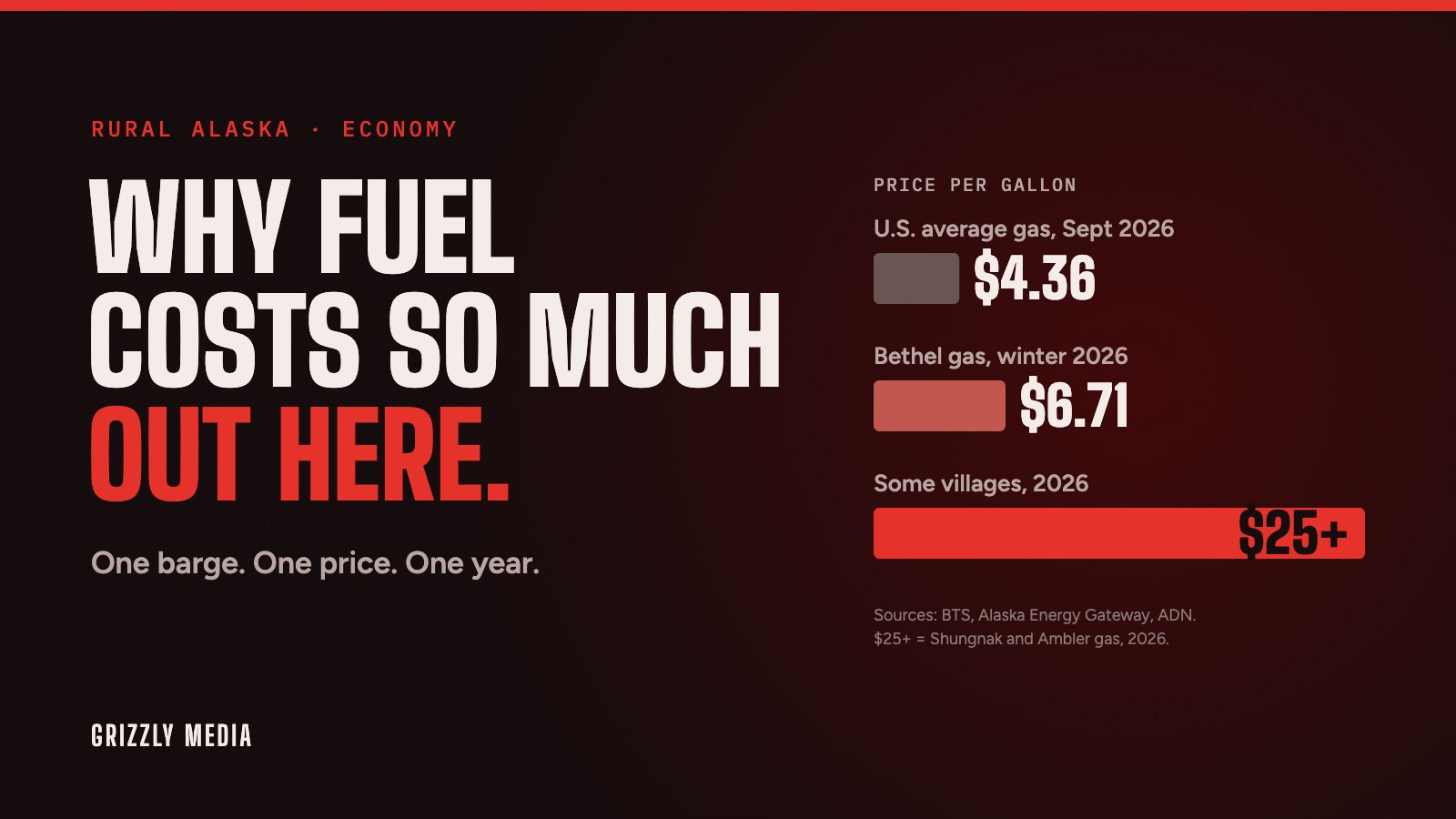
For comparison, the U.S. average for regular gas was $4.36 a gallon in September 2026, up almost 38% from a year earlier. Diesel averaged $6.29, an all-time high.
| Community | Price per gallon | When |
|---|---|---|
| Bethel | Gas $6.71, heating fuel $6.89 | Winter 2026, before the war |
| Bethel and nearby villages | About $7 to $8 | May 2026 |
| Some Y-K coastal communities | Over $9 | May 2026 |
| Hooper Bay | Gas $8.44 | Before the war |
| Unalakleet | Gas $5.74 last year, about $8 expected; diesel over $9 | June 2026 |
| Stebbins | Gas $7.57, and over $10 with a 40% increase | June 2026 |
| Dillingham | Gas $9 | September 2026 |
| Kokhanok | Rose from $10 to $15 | September 2026 |
| Some communities statewide | Heating fuel over $17.50 | May 2026 |
| Shungnak and Ambler | Gas over $25 | October 2026 |
In Norton Sound, gas on the first tanker of the season was expected to cost about 40% more than what residents had been paying at the pump, and diesel more than 50% more.
Fuel doesn't just fill trucks and four-wheelers. It heats schools, runs the power plants and keeps planes flying, so a price jump spreads into almost everything.
Every one of those costs eventually shows up somewhere else: in utility bills, ticket prices, freight charges and what's on the shelf at the store.
Researchers with the Alaska Center for Energy and Power estimate each rural Alaskan uses about 1,200 gallons of fuel a year for heat, transportation and electricity.
At that rate, every $2 increase per gallon adds about $2,400 a year per person. For a household of four, that's close to $10,000 a year, Holdmann estimated. In a worst case of a $5 increase, economist Steve Colt calculated up to $6,000 more per person, and about $450 million across rural communities.
That's money that comes straight out of groceries, travel and everything else. Higher fuel costs can also cut into subsistence, which is at its busiest right as the barges arrive.
Families aren't waiting for help to show up. In Unalakleet, residents are stacking firewood for winter. It takes time to gather, but it's much cheaper than heating oil.
In Stebbins, a village of about 600 people, residents are hauling driftwood that floated down the Yukon River, going out by boat early in the morning and collecting wood for neighbors who don't have a way to get it themselves. City Administrator Daisy Katcheak said more people have also been putting up fish and other traditional foods since Typhoon Merbok knocked out power and spoiled food in 2022.
Still, leaders in the region warn that people on fixed incomes may face hard choices this winter between buying food and buying heating fuel.
There isn't a quick fix, but there are a few tools:
In September, the head of the Alaska Energy Authority said he wasn't ready to call it a crisis yet, and that the main challenge is getting fuel delivered, not a lack of fuel. Communities still waiting on deliveries may end up flying fuel in, which costs more, and smaller runways limit how much a plane can bring.
House Speaker Bryce Edgmon said the Legislature will need to take up the issue again when it returns in January, and that more money for heating assistance may be needed if prices stay high.
Fuel prices out here aren't random, and they aren't just greed. They're the result of buying once a year, at whatever the market is, and paying to move it hundreds of miles to small communities that can't buy in bulk.
When the market spikes during the summer buying window, rural Alaska carries that price all winter. This year, the spike came at the worst possible time.

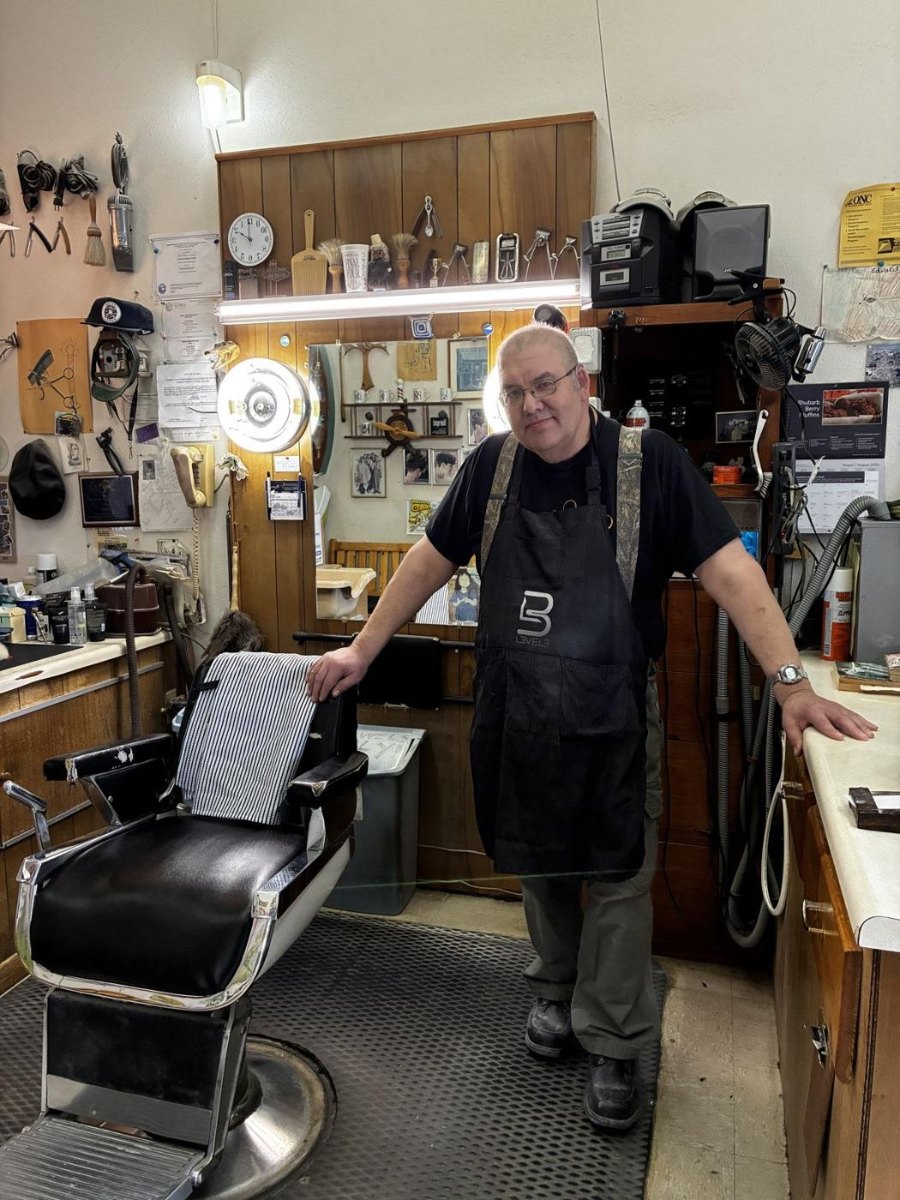
Walk into Stan's Barber Shop and you'll get more than a haircut. For over thirty years, the shop has been one of the places in Bethel where people sit down, wait their turn and catch up on what's happening around town. Some of Stan's first customers now bring their grandkids.
Barbering runs in the Corp family. Stan's father, Don Corp, ran Don's Barber Shop in Upper Michigan and cut hair for 66 and a half years. Stan grew up around the trade, watching his dad work the chair every time he came home.
As a kid, he didn't quite understand why his father loved the job so much. He does now. Don was proud to see his son pick up the shears, and Stan carried the same steady, old-school way of doing things north to Alaska. Don has since passed away, but his trade is still at work every weekday in Bethel.
Stan came to Bethel when he was 18, and he never left. In 1992 he hung his own barber pole in town and opened Stan's Barber Shop. More than three decades later, he's still behind the same chair.
A lot has changed in Bethel since 1992. Businesses have opened and closed, and restaurants have come and gone. Stan's has stayed, with the same walk-in rules and the same man doing the cutting.

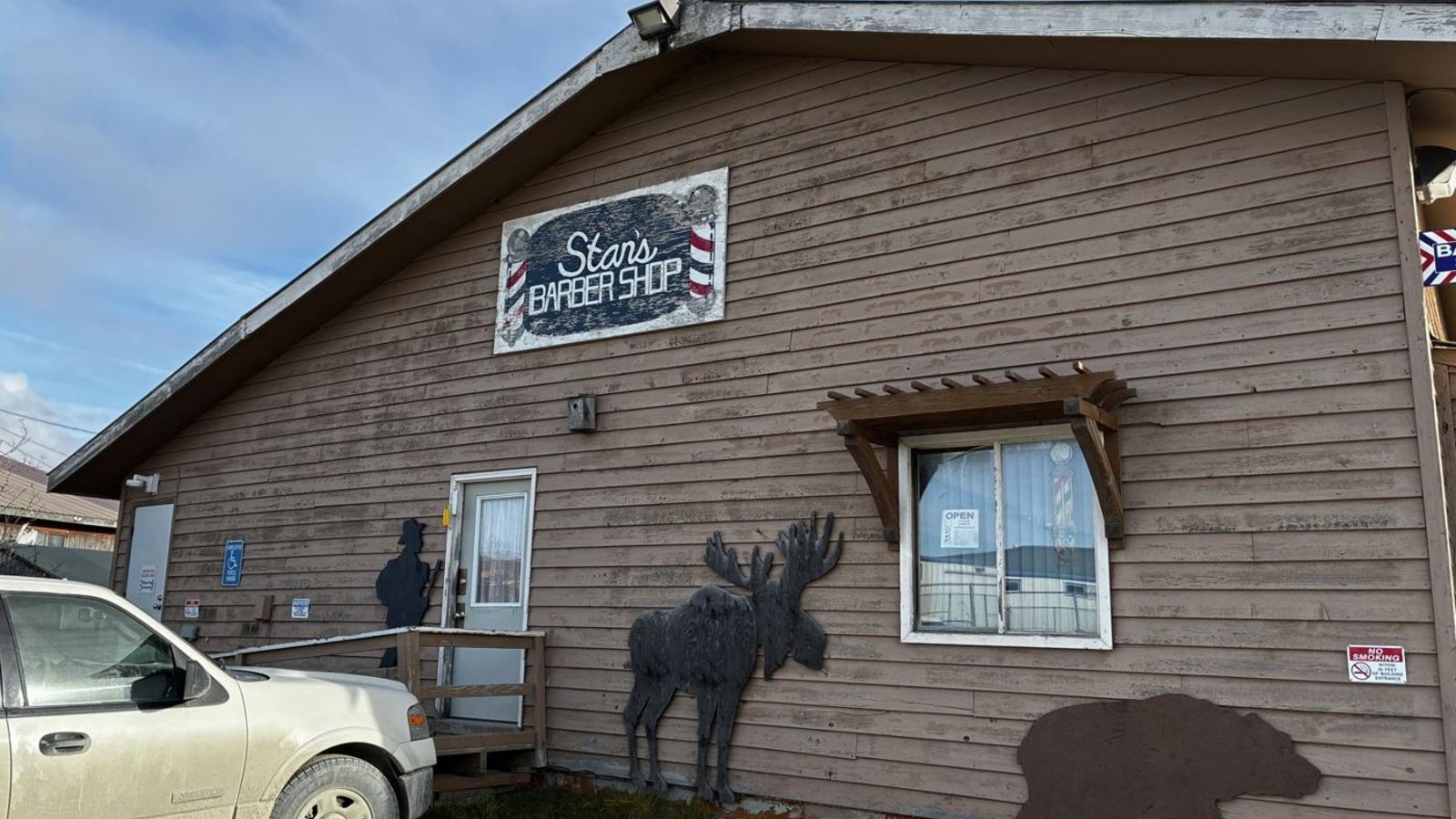
You know you're in the right place when you see the hand-painted sign on the building, with a wooden moose and bear on the wall beside it. Inside, past the barber pole, the shop feels like thirty years of Bethel history.
Antique clippers and shaving brushes sit on the shelf. Tools hang on the wall, next to photos collected over the years. In the middle of it all is a classic barber chair that has seen more regulars than anyone could count. The price list sits on the counter, the hours card is taped in the window, and a small sign asks everyone to silence their cell phones.
Stan's has always been a walk-in shop. No appointments, no sign-up sheet. Come by during open hours, take a seat, and you'll be helped in the order you arrived.
That means the line can get long. A haircut that takes 30 minutes in the chair can turn into a two-hour visit once you count the wait and the conversation. Most regulars don't seem to mind. For a lot of them, the wait is half the reason they come.
Bethel doesn't have a sit-down coffee shop where people linger for hours, and for decades Stan's has filled some of that gap. It's a place where people from town and from villages across the region end up in the same room, with time to talk.
Stan is known for knowing what's going on. Ask him what's happening and he probably already knows: what the city council decided, how the fish are running, where the berries are good, when the next winter storm is coming in, who had a baby and who passed away. For many folks around the Delta, a trip to Stan's is part haircut, part news of the week.
People meet at the shop, too. Two customers from Quinhagak once met for the first time while waiting their turn at Stan's. Another regular, originally from Albania, has been coming in since he moved to Bethel 23 years ago. Others were born and raised in Bethel and have been getting their hair cut at Stan's for most of their lives.
Plenty of Stan's customers have been sitting in his chair for decades. Louie Andrew, Bethel's Traditional Chief, has had Stan cut his hair for about thirty years. When Alaska Business magazine visited the shop in 2023, the chief joked that Stan should leave his eyebrows alone, and called him a good man.
The shop has been around long enough that it now serves families across generations. Some of Stan's earliest customers now bring their grandchildren in for haircuts.
Thirty-plus years in one chair means Stan has seen every trend come through Bethel. Over the years he's done bowl cuts, A-line bobs, perms and hair dyed just about every color. These days it's mostly regular haircuts and trims, buzz cuts, mohawks and beard trims for men, women and kids.
Ask Stan for business advice and the answer is simple: be there. In his words, on the shop's website: “I go to work every day. You have to be there for your customers.”
He means it. Outside of vacations and hunting trips, Stan is in the shop every weekday it's open. In a town where a lot of businesses come and go, that kind of consistency is a big part of why people keep coming back. Customers know the shop will be open, and they know Stan will be in the chair.
On the shop's website, he sums up why he still does it after all these years: “I enjoy it. I like the people. That's the main thing.”
When he's not cutting hair, Stan lives like a lot of people in the region. He loves being out on the river, fishing, and hunting, especially the fall moose hunt. Subsistence, as he puts it, is something just about everyone here does. It's one more thing he shares with the people in his chair, and one more thing to talk about while they wait.
| Service | Price |
|---|---|
| Men | $25 |
| Women | $30 |
| Boys (12 and under) | $23 |
| Girls (12 and under) | $25 |
| Wash | $5 |
One house rule, posted on the counter: please silence your cell phone.
Small businesses like Stan's don't make headlines very often, but they hold a town together. Stan's is a steady job for one man, a place to catch up on the news, a meeting spot for people from across the region, and three decades of haircuts for families that keep coming back. It's proof that in rural Alaska, showing up every day for your customers is still one of the best business plans there is.
Look for the hand-painted sign and the wooden moose on the side of the building, then head inside past the barber pole. Prices, hours and Stan's story are at stansbarber.com.
Sources: stansbarber.com, and Katie Basile's April 2023 photo essay on Stan's Barbershop in Alaska Business magazine.

For a lot of small restaurants and stores, taking orders means a phone that won't stop ringing during the rush, or a national delivery app that takes a cut of every sale. TIKT is a new online ordering system built for local restaurants and retailers.
For customers, ordering from a local restaurant usually means a phone call. Restaurant listing sites can help people find a place to eat, but most don't let them place an order. Customers end up calling one restaurant after another, waiting on busy lines and repeating their order out loud.
For businesses, the usual options don't fit well. National delivery apps take a percentage of every sale, which is hard on a small restaurant's margins. Full point-of-sale systems can be expensive and more than a small shop needs. TIKT is built to be simpler: the business's own ordering page, orders that show up on a screen or print in the kitchen, and card payments that go straight to the business.
The goal is to give small, independent businesses the kind of online ordering that big chains have, without giving up a cut of their sales or their customer relationships.
TIKT gives each business its own online ordering page with its own link. Customers open the link on their phone, build their order and pay. The order shows up instantly on the business's orders screen, which rings when something new comes in. Busy kitchens can add a receipt printer so tickets print on their own.
The ordering page carries the business's own name and menu. TIKT is built for restaurants and retailers. Restaurants and coffee shops can offer pickup and delivery, with choices like size, toppings, milk or syrups. Retail stores offer pickup.
Kusko Pizza is the first business on TIKT.
Every order has a $0.75 TIKT service fee, paid by the customer at checkout, so businesses keep their full menu prices. On top of that, businesses pick a plan:
| Plan | Monthly | One-time setup | What you get |
|---|---|---|---|
| Starter | $0 | $299 | Your own ordering page, pickup and delivery, the orders screen, menu editing, card or cash, and tips |
| Grow | $79 | $299 | Everything in Starter, plus kitchen printer setup, different delivery fees for different areas, your own web address and an "Order Now" button on your website |
| Pro | $149 | $499 | Everything in Grow, plus priority support |
Yearly billing comes with about two months free: Grow is $790 a year and Pro is $1,490 a year. A kitchen receipt printer is sold separately for $549.
Every phone order takes a staff member away from the counter or the kitchen. Online ordering lets customers order when it suits them, gives the kitchen a clear ticket every time, and cuts down on mistakes from orders taken over a noisy phone line. Because each business keeps its own menu prices and its own customers, the money from those orders stays with the business.
Plans and sign-up are at tikt.store.

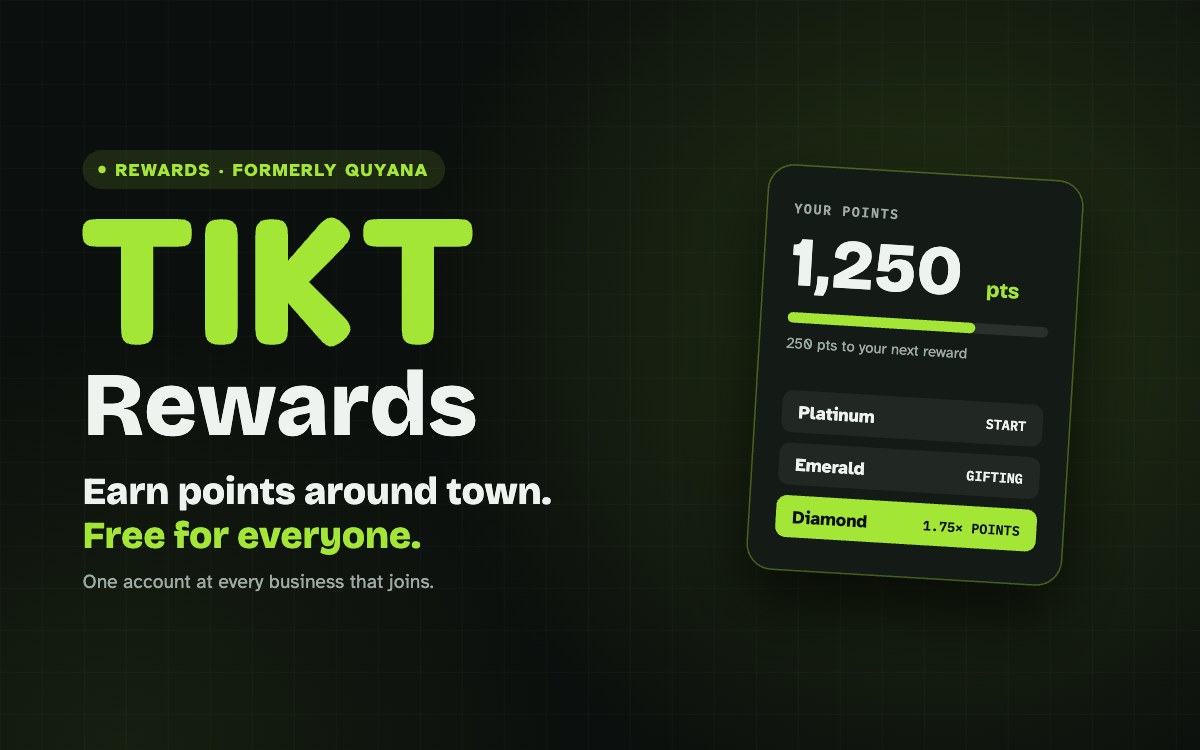
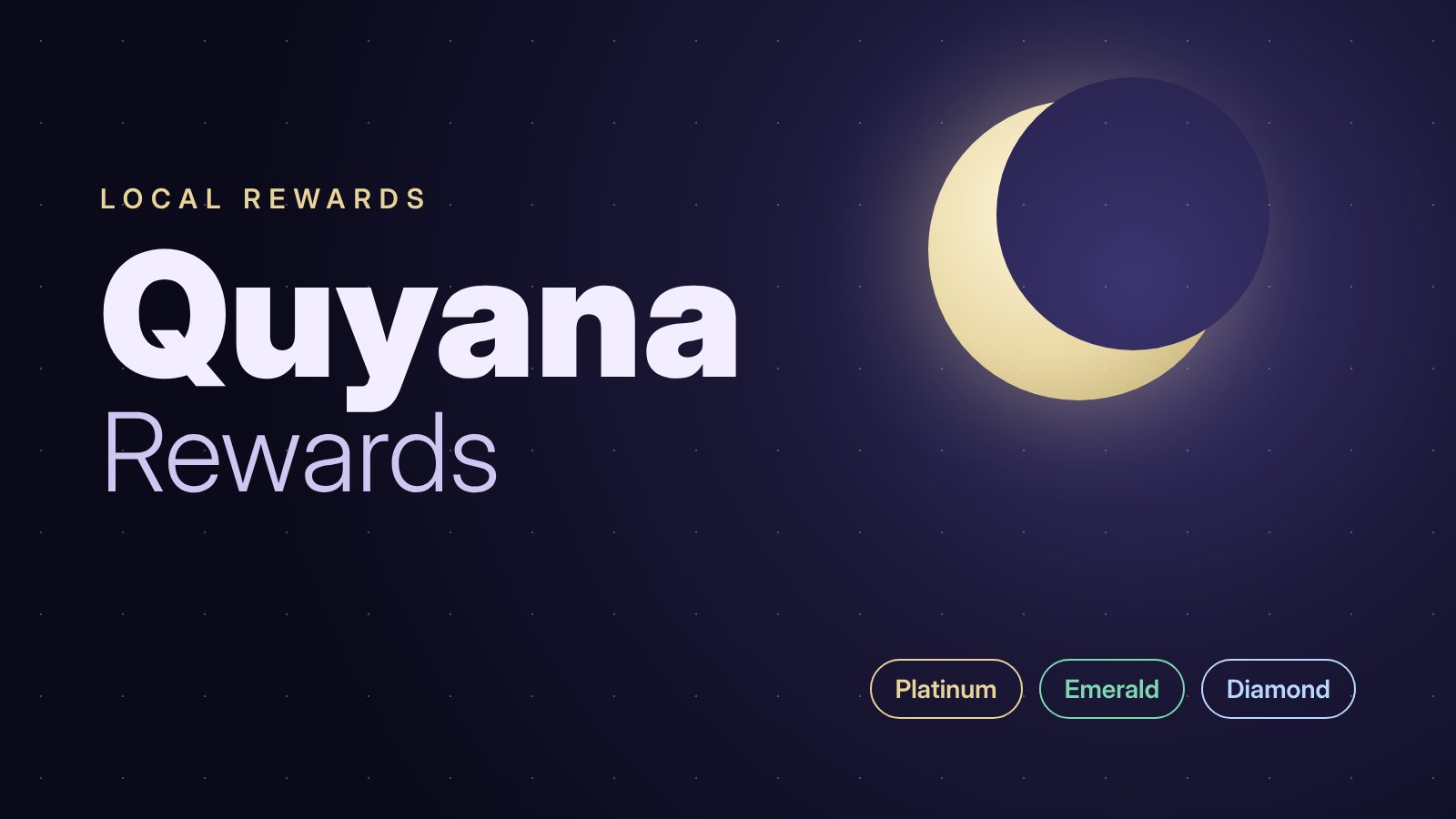
TIKT, the online ordering system for local restaurants and retailers, has acquired Quyana Rewards, the free rewards program that lets people earn points at businesses around town. Quyana Rewards is now TIKT Rewards.
Terms of the deal were not disclosed. For customers and businesses, the biggest change is the name. The program is still free, and it works the same way it did before.
Quyana Rewards now carries the TIKT name and joins TIKT's online ordering under one brand. Businesses that take orders online with TIKT and reward their regulars with TIKT Rewards are now working with one company for both.
The two were already connected. When customers order online from a TIKT business that also runs the rewards program, they earn points on those orders automatically, the same as they would at the counter.
Customers who already signed up don't need to do anything. Their account and their points stay right where they are.
Big chains have had both for years: an app to order ahead and a rewards program that brings customers back. Most small businesses in rural Alaska haven't had either.
Putting online ordering and rewards under one name makes the pitch to local businesses simpler. Customers can order ahead, earn points on every order, and come back for the rewards. Businesses keep their own menus, set their own rewards, and thank the regulars who keep them going.
Quyana means "thank you" in Yup'ik. The program was built around that idea: a way for the businesses in town to thank the people who keep coming back. The name is changing, but the thank-you for shopping local is the same.
Kusko Pizza was the first business on the program. Customers and businesses can sign up for free at rewards.tikt.store.

Update, October 22, 2026: Quyana Rewards is now TIKT Rewards. Read the news →
Big chains have rewards apps. Most small businesses in rural Alaska don't. Quyana Rewards is a rewards program for everyone in town: any local business can join, and anyone can sign up and earn points with one account at every participating business.
Quyana means "thank you" in Yup'ik, and that's the idea: a way for the businesses in town to thank the people who keep coming back.
Quyana Rewards runs in your phone's web browser at rewards.tikt.store. There's nothing to download from an app store, and you can add it to your home screen like an app. One account works at every business in town that uses Quyana, and you can switch between them to see your points at each one.
Kusko Pizza is the first business on Quyana Rewards.
The more you visit, the higher your level. There are three levels: Platinum, Emerald and Diamond. Higher levels earn points faster, and Diamond members earn 1.75 points per $1.
Nothing. Quyana Rewards is free for customers and free for businesses. There are no monthly fees and no sign-up fees.
Customers and businesses can sign up at rewards.tikt.store.
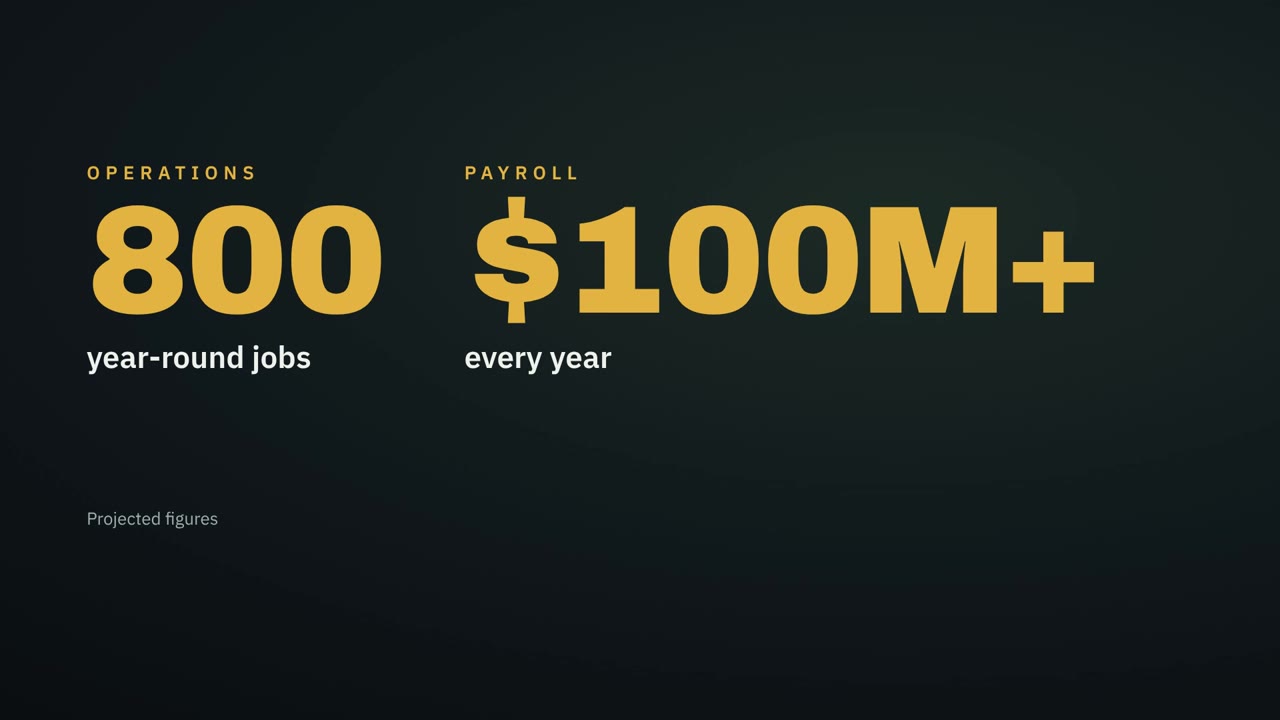
Donlin Gold could be the largest private economic engine the Yukon-Kuskokwim region has ever had. It promises thousands of construction jobs, about 800 long-term jobs, and a 27-year stream of revenue to the Alaska Native corporations that own the land.
The YK region covers 56 villages across an area about the size of Oregon. It is one of the poorest regions in the country, and fuel can cost close to $9 a gallon in coastal villages. Steady, year-round jobs close to home are scarce.
What sets Donlin apart is who owns the ground. Calista Corporation selected this land under the 1971 Alaska Native Claims Settlement Act and owns the minerals. The Kuskokwim Corporation (TKC) owns the surface. That means the region's own Native corporations sit at the table, not just outside investors.
Building the mine is projected to take 3 to 4 years and employ about 3,000 workers, paying roughly $375 million in wages. Once running, Donlin expects to employ about 800 people year-round, with a payroll of more than $100 million a year.
| Phase | Length | Workers | Wages |
|---|---|---|---|
| Construction | 3–4 years | about 3,000 | about $375M total |
| Operations | about 27 years | about 800 | $100M+ per year |
Those are projections, not guarantees. But the project's track record on local hiring is real. During advanced exploration, more than 90% of the roughly 200 workers on site were Calista shareholders or their descendants (2008).
A mine job also builds skills that travel: heavy equipment, electrical, mechanical, environmental monitoring and camp operations. Those trades stay with a worker long after any single project ends.
Donlin is built to last a generation. The mine is planned for about 27 years and is expected to average more than 1 million ounces of gold a year. Its proven and probable reserves are part of a deposit of roughly 40 million ounces in measured and indicated resources, so the mine life could grow.
A payroll of $100 million a year does not stay at the mine site. Workers spend it at home: on groceries, fuel, boats, snowmachines, housing and family. That spending flows through local stores, air carriers, barge lines, fuel distributors and the small businesses that serve them.
The mine will also buy goods and services for decades. Shipping, catering, maintenance, environmental work and transportation are all contracts that regional and Native-owned firms can compete for. The owners report working with more than 60 communities across the region.
The project is also moving forward on paper. It is federally permitted, all federal and state permits remain in effect, and an updated feasibility study led by Fluor is targeted for 2027.
Because Calista owns the minerals and TKC owns the surface, Donlin pays the region's own corporations to operate on their land. Calista says shareholders will receive economic benefits from project revenues, including distributions. Calista has paid more than $141.6 million in dividends and distributions since it began; a producing gold mine could add a major new source on top of that.
The Red Dog Mine in Northwest Alaska shows what this can look like. NANA, the regional corporation that owns Red Dog's land, has received about $2 billion in royalties over three decades. About 57% of Red Dog's roughly 600 workers are Alaska Native, with an average wage around $100,000.
Donlin's revenue would also reach far beyond Calista, through the Alaska Native Claims Settlement Act:
That sharing cuts both ways. Calista keeps 30% of its own Donlin resource revenue, and it also receives its share of other regions' resource revenue. Donlin would turn Calista from a corporation that mostly receives 7(i) money into one that generates it, putting the YK region among Alaska's major resource owners.
The exact royalty rates and payments in Calista's lease and TKC's surface agreement are not spelled out in the public sources reviewed here. Shareholders who want those numbers can ask Calista and TKC directly.
Donlin needs more than 100 federal and state permits. Most key permits are issued, and the owners say all federal and state permits remain in effect. Supporters point to the project's work with the communities it would affect:
Calista's position is that resource development and subsistence can coexist under strict regulation and oversight. Supporters also argue that subsistence itself takes cash: for fuel, boats, nets and snowmachines. Steady wages can help families stay in their villages and keep living off the land.
Donlin Gold offers the YK region something it has rarely had: thousands of jobs during construction, about 800 steady jobs for 27 years, a $100 million-plus yearly payroll, and resource revenue flowing to the region's own Native corporations and their shareholders. Done right, it could change what's possible for families who want to build a future at home.
Promos from local businesses across the Yukon-Kuskokwim region and Alaska. Every ad here is for a real local business or service.
AdWalk in, take a seat and catch up on what's going on around town. No appointments, first come, first served. Men $25, women $30, kids from $23. Open weekdays from 10 am.
See prices & hoursPepperoni, sausage, pineapple and jalapeños, finished with honey. Burgers, fries and pizzas made by local friends on Ridgecrest Drive.
Order from Kusko Pizza
AdYour own ordering page for your restaurant or store. Pickup and delivery, card or cash, and no markup on your card payments.
See TIKT plans
AdOne free account, points at every business that joins, and rewards you can share with family and friends.
Join TIKT RewardsSandwiches, wings, nachos and more from Kusko Pizza at 401 Ridgecrest Drive. Tap an ad to see it full size.
Online ads are $50 a week or $150 a month. Buy an ad, and we can also make it for you, including a short video ad, a flyer or a designed post.
Grizzly Media is a media and marketing company for small businesses across the state.
Small businesses carry rural Alaska. Their stories deserve to be seen.
We started Grizzly Media because the shops, cafes and services that keep our towns running rarely get the spotlight. They're too busy serving customers to film, design and post.
So we bring the camera to them. We sit down with owners, capture the real work, and turn it into content they can use for months. Every feature also adds to a growing record of the people building businesses out here.
Retail, food, trades and services, new and established.
Restaurants, cafes, food trucks and anyone with a menu worth showing off.
Retail, trades, salons, rentals and the services your town depends on.
Founders opening their doors who need a brand and a first impression.
Sign in to pay for services, see what you've ordered and spent, and follow each project from start to finish.
Update each order or booking and leave a note. Customers see both on their account page.
Request a Spotlight visit, a shoot, a meeting or a quote. Pick a day that works for you and we'll confirm it by email.
Printing and laminating can be delivered to you in person locally. Email or text us your files after you order.
Travel outside our local area is quoted separately. You pay securely with Stripe.